

Last night my wife and I, along with two neighbor friends, attended a talk in Portland, Oregon by neuroscientist Christof Koch. Title: "The Quest for Consciousness."
What is consciousness? What is hiding in our unconscious mind? And how can you harness both for a more fulfilling life? Consciousness is like an orchestra, and our brain is its conductor. Stemming in part from a long-standing collaboration with the late Nobel Laureate Francis Crick, Christof Koch, Ph.D., will be exploring how the flickering of nerve cells in the brain leads to information processing and the unforgettable experiences that make us who we are.
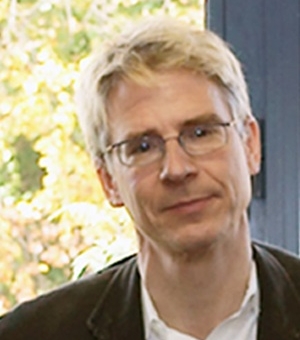
Koch, like virtually all neuroscientists, considers that consciousness arises from goings-on within the physical brain.
He made a point that I've frequently emphasized in my blog posts: if someone hits you in the back of the head with a baseball bat, you'll "see stars." And maybe lose consciousness. Ditto if you're given anesthesia.
This alone does a pretty good job of demolishing claims that consciousness somehow is immaterial, or that we possess a conscious soul/spirit. If this were the case, why do people lose consciousness when the brain is impacted?
During the question and answer period, Koch said that he had taken part in meetings with the Dalai Lama and some leading Buddhist monks.
The monks would try to argue that consciousness is non-physical, the supernatural equivalent of radio waves filling space. A brain, according to the monks, is needed to receive and interpret the consciousness "signal," but the signal is immaterial.
Koch said that when he asked the monks to explain how something non-physical (consciousness) could interact with something physical (a brain), "I got a bunch of hand-waving." Meaning, nonsensical pseudo-explanations.
"Consciousness is a physical thing," Koch told us. "It's the brain."
In his view, consciousness is an integral aspect of the universe, like time, space, energy, matter. Organized pieces of matter have an additional property, Koch said, consciousness.
Consciousness doesn't require language or self-consciousness.
That inner voice which speaks inside our heads much of the time isn't needed for consciousness. Koch is an avid runner and rock climber. He said that doing these things, along with biking, motorcycling, and other activities requiring a lot of focus, can put us in a pleasant state of "flow" where we just do, rather than thinking I must do…"
Figuring things out comes into play when we encounter a problem, like a stretch of rock face that doesn't seem to have any hand-holds. Then, Koch said, the brain has to engage in some logical problem-solving.
Otherwise, most of what we do arises from unconscious processes. We don't consciously decide how to speak, write, move our hands, walk, or do most of our daily activities. Likewise, our bodily organs — liver, heart, and so on — don't require consciousness to function.
At least, apparently they don't.
Koch didn't have time to get into the details of how it is possible to tell the difference between entities that have consciousness, and entities that don't. Personally, I like the idea that consciousness is a continuum, with plants, for example, possessing a small degree of consciousness and us humans, a lot.
One of his chief quests as the chief scientific officer at the Allen Institute for Brain Science in Seattle is to search for the neural correlates of consciousness, NCC. Wikipedia defines this as "the minimal set of neuronal events and mechanisms sufficient for a specific conscious percept."
At the Institute, they've set out to map the entire mouse brain. Koch said that it is obvious that the NCC for vision isn't in the eye, because we can "see" things in our imagination and dreams. And hallucinate what isn't seen by the eye.
With the human brain having 89 billion neurons, each connected to thousands of other neurons, obviously the search for neural correlates of consciousness, and understanding of how the brain works generally, is hugely complex.
Yet the cortex, Koch demonstrated, is about the size of a sheet of pizza dough. He flopped around a thin piece of flexible material, saying that human consciousness is contained within a similarly-sized bit of brain matter (what I like to term, "brain meat").
This, for me, was the unsurprising, yet still deeply fascinating, centerpiece of Koch's talk: that consciousness is thoroughly material, and also thoroughly mysterious. Not in a supernatural sense, obviously — a natural sense.
Which stimulates as much awe, if not more, than religious, spiritual, and mystical conceptions of consciousness.
Koch concluded his talk with a several minute-long video of a journey through a cubic millimeter of mouse brain. Various parts of the brain — neurons, synapses, other connections? (can't remember) — were shown in different colors.
It was sort of like an actual Fantastic Voyage, a tour of the very, very small bits of brain that, combined, make it possible for mice, humans, and other conscious creatures to be aware of the vast wide world.
Just this single cubic millimeter of mouse brain, with its 100,000 neurons (remember: the human brain has 89 billion!) was astoundingly complex. Bit by bit, the video tour "descended" through the various levels of this 1 millimeter, showing the intricate neuronal interconnections.
This, albeit on a vastly grander scale, is who we are, as a Homo sapiens brain.
Matter. Energy. Chemicals. Electricity. All organized in such a fashion as to make it possible to ponder in a self-reflective/reflexive manner the brain that is both being pondered, and doing the pondering.
Near the end of Koch's book, "Consciousness: Confessions of a Romantic Reductionist," he says:
The pioneering generation of stars had to die in spectacular supernova fashion to seed space with the heavier elements necessary for the second act of creation — the rise of self-replicating bags of chemicals on a rocky planet orbiting a young star at just the right distance.
The competitive pressures of natural selection triggered the third act of creation — the accession of creatures endowed with sentience, with subjective states.
As the complexity of their nervous systems grew to staggering proportions, some of these creatures evolved the ability to think about themselves and to contemplate the splendidly beautiful and terrifyingly cruel world around them.
Along with the amazing world within them. Which, in fact, is them: the brain that makes consciousness possible.
Discover more from Church of the Churchless
Subscribe to get the latest posts sent to your email.
Very nice summary….. thanks!!!
I prefer to use the term “physical” to “material” as “material” makes one think of matter as opposed to energy. I’m intrigued by electromagnetic theories of consciousness
http://en.wikipedia.org/wiki/Electromagnetic_theories_of_consciousness
The evidence from anesthesia research is that consciousness arises from the brain when there are large-scale brain wave interactions.
“Consciousness is a physical thing,” Koch told us. “It’s the brain.” –
It’s really amazing how so called professional scientists
insist on foolishnesses
while seeing themselves at billions of occasions that f.i.
the lonely seed of aan oak after centuries , a sequoia, , , WITHOUT THESE BILLIONS OF NEURONS
‘know’ how to construct such magnificent structures as an oak, a sequoia
or
How a simple amoebe ( wiki it ) is capable to inhabit a planet with cities and the ISS
The brain is just receiving orders from the ‘dark’ energy powers ( what a horrible name ) like the oak semen and the amoebe
Humans have a certain degree° of feed-back freedom
° degree depends on their mental = sometimes spiritual evolution,
meaured in levels of REAL Love
777
I see it like 777 in many ways. The sequoia is as conscious as we are. We are all the same, masquerading as different forms.
As time is sooooo relative
the performance of the amoebe
is greater
than what most humans come up with
Humans are bad in most things, specially IQ , . . except Love°°
Angels, deities are bad in Love but excell with 999
777
°°yes , , strong with hate too
Hmm… Clearly he’s not addressing all the mountains of hard data among long term meditators.
That data demonstrates that all kinds of perceptions and experiences arise from turning the brain down, quieting the brain’s functioning, reducing neural functioning.
All that data, decades of it, stands as proof that the brain at best is a corrolate of consciousness, and at worst, is a filter, a limiting gate that when lowered, like a door, allows a flood of experiences otherwise unatainable.
And there are centuries of anecdotal examples as well. But why go there when you can just ignore hard science in meditation?
Less brain IS more conscious awareness and focus.
Focus itself is a mechanism of turning off portions of the brain in order to perceive and experience more directly and more fully.
Consciousness, paradoxically, is not more neural activity, but less.
As for unconsciousness resulting from brain injury, I refer you to near death experiences. Those reports are detailed and vivid.
But what is the point of arguing against atheism with an atheist?
But this is how the religion of atheism works…This is how psuedo science works…by clinging to one piece of information and ignoring decades of hard research in other areas…and centuries of anecdotal reports, just like the dogmatic religionists who actually ignore whole sections of the Bible in order to defend their limited system of belief.
It’s a form of prejudice, really.
Truth invites inspection, and never misleads by ignoring hard data.
So Koch actually has a solution to Chalmers’ Hard Problem of qualia? Well, no. What he has done is to redefine consciousness to Easy Problem issues,….. information processing, cognition, self reference so on.
The odd thing is that you seemed to understand the HP when you were reading the Conscious mind.
“Consciousness is a physical thing,” Koch told us. “It’s the brain”
….
“In his view, consciousness is an integral aspect of the universe, like time, space, energy, matter.
Which? These are not compatible claims. Consciousness is not a fundamental aspect of the universe ACCORDING TO PHYSICS …the physics textbooks we actually have. To reconcile these claims, he needs to reinvent physics.
“”Consciousness is a physical thing,” Koch told us. “It’s the brain.””
And here:
“Note that Koch is thoroughly materialistic.”
https://churchofthechurchless.com/2015/03/consciousness-is-a-fundamental-property-of-matter
Really nice to revisit this almost 10 years later to the day.
I’d been aware of Koch for quite a while, but hadn’t actually read his book or heard him speak. I’d just engaged with his theories on a forum some 10+ years ago where folks discussed consciousness and the brain from a materialist vs spiritual perspective (not here!).
So it was with great delight I saw this in my youtube feed, a new discussion posted just yesterday.
I highly recommend watching the entire thing if you have an interest in the brain and consciousness, but DEFINITELY WATCH @57 to 68 minutes. Catch a look Brian!:
“Famous Neuroscientist on 5-MeO-DMT and Integrated Information Theory | Christof Koch
In his latest book, neuroscientist Dr. Christof Koch describes how he, during a psychedelic experience on 5-MeO-DMT, felt that he was one with the universe. Essentia Foundation’s Hans Busstra interviews Koch on his new book and Integrated Information Theory (IIT), the scientific theory of consciousness Christof Koch and Giulio Tononi are famous for. Can IIT account for what Koch experienced during his trip?”
https://www.youtube.com/watch?v=1V-5t0ZPY7E&pp=ygUIa29jaCBkbXQ%3D
Hehehehe. Hehehe. Hehe. He.
I absolutely love moments like these.
A most ENLIGHTENING 10 mins with one of Brian’s and other reductionists Priests of “it’s just the brain”.
Koch is a dude, I doth my cap off to him for being someone who embodies what I’ve been advocating here for more than a decade, often to much ridicule, scoffing and dire warnings.
Lovely, just lovely.
I will definitely be buying his new book.
:o)
PHAT!
Words and phrases to focus on:
“Ayahuasca”
“Ontological shock”
“If I claim to be a student of consciousness……then for sure I want to experience it”
“I was comfortable with this thing the brain produces consciousness…….but then I had this experience….. like mind at large…..like Aldous Huxley….”
“Surfing this panoply of galaxies”
“I somehow tapped into “I’m the universe””
“So I was totally complexed. Completely complexed for several days…”
“It shows the brain is capable of having extraordinary experiences…… maybe this experience is the blackswan which proves there is something wrong with this view [the brain produces consciousness]”
“And then I read this book from Bernardo Kastrup and I was really intrigued by it…..so I’m now in this kind of in between metaphysical state…”
Etc.
I thank you!