My talk about the One at a RSSB National Satsang Weekend
Blind belief feels good, but isn’t a reliable guide to truth
Dalai Lama says, “We must listen to scientists.”
Do you think this person likes me? Hard to tell.
Gurinder Singh Dhillon says we already are One
Youthful vitality is mine now that I have the not-so-secret Five Rites
Flow is key to poker, and also to life
One death is unbearably sad — 132,218 is beyond imagining
May I accept reality as it is (if only Trump would)
Spiritual independence should be celebrated every day
Tomorrow, the fourth of July, is Independence Day in the United States. It commemorates the signing of the Declaration of Independence from Britain's King George on July 4, 1776.
Here's another blast from my blog post past that I wrote on July 4, 2005. Some of my views have changed over the past fifteen years, but I still like the basic theme of this post.
Celebrate your spiritual independence
The fourth of July is when we in the United States celebrate our country’s declaration of independence from Great Britain. It’s also a good day for anyone in the world to celebrate his or her independence from Small-Minded Religion.
Religions don’t start out this way, though: small-minded. Without exception the source of each great religion can be traced to people who somehow were able to break the bounds of normal human consciousness and experience truths beyond the sphere of everyday existence.
Moses, Abraham, Jesus, Muhammad, Buddha, Lao Tzu, Nanak, early Hindu sages: all shared with humankind a remarkably original revelation or philosophy. While culturally they necessarily followed in the footsteps of historical predecessors, their spiritual attainments broke new ground.
As is the case with mystics in general. It’s difficult to make contact with the divine. Reading holy books, worshipping in holy places, obeying holy men and women, carrying out holy works—these things are easy to do. They’re within the capability of almost anyone.
Such is the province of small-minded religion, where the limitless experience of great mystics is reduced to narrow confines. Jesus, Buddha, Lao Tzu, and their spiritual brethren refused to be constrained by the accepted religious teachings of their day. This is why they are called “great”: they stood above shallow traditions, possessing a vision that pierced the clouds of conventional wisdom.
In short, they were spiritually independent. But independence only grows well in the wild. It doesn’t thrive when transplanted into the rows and furrows of garden-variety religion, for the priestly classes consider spiritual independence to be a vice, not a virtue.
The strange thing, of course, is that the revered founder(s) of every religion possessed the very quality that “protectors of the faith” now assiduously attempt to stamp out in followers. Namely, an aversion to following. More precisely, an aversion to following any practice that doesn’t lead to direct experience of the highest truths.
Jesus overthrew the small-minded dogmas of the Judaism of his time. But when Meister Eckhart attempted to overthrow the small-minded conceptions of the Catholicism of his time, he was condemned by the Pope as a heretic. Thus spiritual independence becomes a vice after an original independent spiritual vision has become codified into a rigid theology of do’s and don’ts, rights and wrongs, approved truths and condemned heresies.
In my opinion, anyone who reads widely in the diverse literature of the world’s religions, and approaches these writings without preconceived notions of truth and falsehood, must almost necessarily come to this conclusion: There are many ways to the One, or God. For given the marvelous variety of spiritual and mystical experience, it must be that either (1) all but a few of those who report direct contact with the divine are deluded, or (2) divinity appears in a myriad of guises.
I lean strongly toward the second option. I find it extremely difficult to believe that only one person, or one religion, or one spiritual practice leads to the One. If ultimate reality is viewed as a mountain, with the highest truth lying at the summit, then many paths can be taken up the slopes. Only at the very top do the paths converge at unity; diversity otherwise marks the way.
So independence is the hallmark of genuine spirituality. An independent seeker of God, the One, allows divinity to reveal itself without constraints, without preconceptions, without manmade boundaries. There are no hard and fast rules in spiritual mountaineering; you make your way from where you find yourself, blazing your own trail—because your experience belongs to no one but you.
Certainly others can help support and guide you, but obviously they aren’t you. Only you can honor, preserve, protect, and, most importantly, expand, your spiritual independence.
Along these lines, as an addendum to this post I’ll share an excerpt from a 1974 essay, “Live Not by Lies,” by Alexander Solzhenitsyn. Writing in the Soviet Union shortly before he was arrested and exiled to West Germany, he speaks of spiritual independence in a much more political context.
But I liked how he spoke of the choice that must be made for truth or falsehood, spiritual independence or spiritual servitude, regardless of the consequences. The applicability to those who desire to be free not of political domination, but of religious domination, is clear (a seeming typo has been changed, “talk” to “walk”).
COVID reality is kicking Donald Trump in the butt
Open Thread 33 (free speech for comments)
Mystery and Reality have an intriguing relationship
Past and present are outside our control
I’m inspired by speaking truth to power. Here’s an example from Salem.
I've never been much of an organization man. Which, I suppose, now needs to be phrased as "organization person." Regardless, I can recall numerous instances when I haven't been shy about rocking an organizational boat when I felt that was deserved.
So I get inspired by people who do this in their own way. Probably most of us do. There's something about an individual, or a small group, standing up for values they believe in against a more powerful entity that resonates in most hearts and minds.
We admire underdogs of the canine variety who aren't afraid to bare their teeth and snarl at the big German Shepherd. We love movies about a solitary crusader who takes on a malevolent corporation. We applaud musicians who share songs of protest with us.
And because this is a Church of the Churchless blog, I never tire of hearing about members of a religion who risk ostracism, or worse, by speaking out about bad things happening in their faith.
Thus it isn't surprising that I was energized last night by watching on You Tube a meeting of the Salem-Keizer school board here in Oregon that I thought would be considerably less interesting than it turned out to be.
Students in the school district, which is the second largest in the state, have been engaged in Black Lives Matter protests for several weeks or more. They've been calling for the removal of school resource police officers for reasons that make a lot of sense.
Last night the school board, which currently is dominated by conservatives, met to approve a $1.5 billion budget that includes money for the school resource officers. I decided to watch the meeting online because I'd written on my Salem Political Snark blog about the Salem City Council addressing this issue, since the Police Department supplies some of the officers for that program.
But the school board meeting turned out to be gripping, filled with drama. I wrote about it today in "Superintendent calls out Salem-Keizer school board for not being anti-racist."
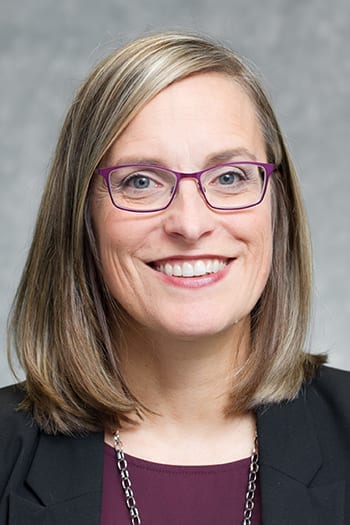
Along with the students who called, with good reason, for the resignation of two school board members, the heroine of the evening was Superintendent Christy Perry.
She stood up against the school board in a marvelous message that she read near the beginning of the meeting. This was a surprising moment, as I noted in my blog post about the meeting.
The good news is that after the low point of Heyen's self-absorbed opening remarks, I was mesmerized by a powerful statement from Salem-Keizer Superintendent Christy Perry.
It was amazing.
I've included the entire statement at the end of this post, boldfacing parts that stuck out for me. Perry courageously criticized the school board for their weak-kneed responses to student demands in the wake of weeks of Black Lives Matter protests here in Salem.
Here's a few excerpts to whet your appetite for reading the whole statement.
We have provided opportunities to help understand our own biases. Our board members barely engage in the training. We have instances of social media display of white supremacy, a black face mask and mockery over that mask. All actions I can’t defend.
… I will advocate for Director Blasi as your next board chair because she is one of the few leaders who have at least the embers of trust from our communities of color.
… I am so committed to this, that I will only continue to do this work if I can have will and the strength to do this even if it means calling you out.
… I commit to the vision for creating the conditions for safe and welcoming schools, especially for our students of color, which includes an antiracist agenda and truly listening to our communities of color. I urge you to reaffirm your commitment to my contract as well knowing full well my support for anti-racist learning.
Really gutsy of Perry.
The school board hires and fires superintendents. Yet she was willing to publicly call them out for failing to do their duty to protect and serve students of color and other disadvantaged students. I liked her statement that she wants the board to reaffirm their commitment to her contract.
Sure, it's fair to say that Perry, being the Superintendent, is a powerful person who was speaking truth to other powerful people on the school board. But that doesn't take away from her inspiring message.
Most people reading this post will have no interest in the Salem-Keizer School District. However, I urge you to read Perry's message by clicking on the continuation to this post if you have any interest in those who stand up for their values even when this is risky for them. Again, I've boldfaced parts that I found particularly moving.