Let’s add a new L-word to “Who is the guru?” possibilities

Back in 2006 I pondered the question, Who is the guru?

By “guru,” I meant someone who is (1) alive today, and (2) considered by his/her devotees to be, if not actually God in human form, darn close to this exalted level of divinity.
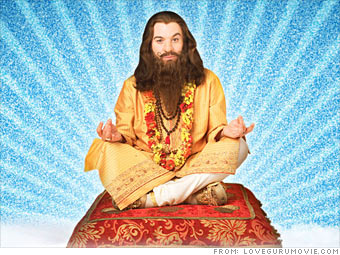
Guru

This is, obviously, a different sort of religious personage than, say, a Christian minister. Or even the Pope. It is easy to visualize them sincerely believing that they are God’s representatives on Earth, while recognizing that they are entirely human.

In some Eastern religions, though, the distinction between God and guru is minimal. Even nonexistent.

The Indian guru I was initiated by in 1971, Charan Singh, was considered to have attained a state of God-realization by his followers.

No longer believing this, my “Who is the guru?” post was an attempt to make sense of the fact that Charan Singh, along with his successor Gurinder Singh, could sit on a podium in front of tens of thousands of adoring disciples who looked upon them as not only godly, but as God.

I’ve been thinking about the four options concerning who Jesus was, according to biblical scholar Bart Ehrman: a liar, a lunatic, the Lord, or a legend. When it comes to a long-dead historical figure like Jesus, these options make sense. But what about a modern-day guru who is similarly proclaimed to be God in human form?

I was initiated by such a guru, Charan Singh Grewal. I sat at his feet, literally. I had two personal interviews with him. I heard him speak many times. I saw him worshipped by tens of thousands of devotees as a divine incarnation.

And yet, I still don’t know what to make of him. Or his successor, Gurinder Singh Dhillon. Who is the guru? A philosophically-inclined friend of mine likes to say, “There’s only one question to ask a guru who is supposedly God in human form: Are you who people claim you are?”

But given Ehrman’s four options, the answer wouldn’t be all that revealing. If the guru was a liar, you couldn’t believe what he said. Ditto if he was a lunatic. And even if he truly was the Lord, and said as much, what reason would there be to believe him? Plus, one could argue that a God-man would be so humble, you’d never hear a claim to divinity pass his lips.

With living gurus the legend option doesn’t come into play. They’re alive and kicking, not legendary. Quite a few men (and a few women) of recent vintage are considered by the faithful to be manifestations of God. For example, Meher Baba, Ramakrishna, and Lokenath.

So I muse over my recollections of Charan Singh and Gurinder Singh, trying to decide whether they’re best described as liars, lunatics, or the Lord.

I ended up preferring a fourth option, loyalist.

Is there another L-word that better fills the bill? One springs to mind: loyalist. Perhaps when a successor is appointed to fill the shoes of a highly-regarded guru, loyalty both to his predecessor and to the surrounding organization prevents the newcomer from crying out, “Hey, I’m not God! I’m just a man filling the role of a guru.”

This theory got support in a video David Lane made about Charan Singh, as described in a 2013 post, “Charan Singh was a loyal guru.”

But a essay by Michael Shermer in his Scientific American “Skeptic” column suggests another possibility. In “Lies We Tell Ourselves: How Deception Leads to Self-Deception,” Shermer says:

Trivers’s theory adds an evolutionary explanation to my own operant conditioning model to explain why psychics, mediums, cult leaders, and the like probably start off aware that a modicum of deception is involved in their craft (justified in the name of a higher cause). But as their followers positively reinforce their message, they come to believe their shtick (“maybe I really can read minds, tell the future, save humanity”).

Click on the link above to read the full piece by Shermer. I’ll also include it as a continuation to this post.

Desperate to find an L-word to add to the liar, lunatic, Lord, or loyalist possibilities, the best I could come up with after a brief look at some online thesauruses was to substitute “legerdemain” for self-deception.

It seems to fit, as rarely used as the word is.

1. sleight of hand.
2. trickery; deception.
3. any artful trick.

So let’s add a likely option that answers the question, “Who is the guru?” Legerdemainist. Which actually is a word.

The guru tricks himself into believing that he (or she) is God. Or God in human form, after being viewed as divine by fawning followers. This act of self-deception further bolsters his standing among devotees, as Shermer explains.

As Abraham Lincoln well advised, “You can fool some of the people all of the time and all of the people some of the time, but you cannot fool all of the people all of the time.” Unless self-deception is involved. If you believe the lie, you are less likely to give off the normal cues of lying that others might perceive: deception and deception detection create self-deception.

Interesting. Read on to peruse Shermer’s entire essay.

David Lane addresses the “guru question”

Wow, nice job, Dave.  David Lane, a.k.a. the Neural Surfer, responded to a questioning comment on one of my blog posts from "Appreciative Reader" by putting up a one page web site, The Guru Question. Give it a read. I found the page most interesting, especially the part where Lane says nice things about me and this blog. For some (obvious) reason I found this particularly persuasive.  Lane is a bit more positive about the India-based spiritual/religious organization we both have belonged to, Radha Soami Satsang Beas (RSSB). Which is led by a guru, Gurinder Singh. We do share skepticism…

News flash from God’s guru: smoking and medical marijuana are evil

In Christianity, the Ten Commandments are permanent. But in Eastern guru-centered religions, God's emissary on earth (often termed a "perfect living master") substitutes for holy scripture. So what is supposedly moral and what isn't can shift with the times as one guru succeeds another, or as the same guru decides to issue new edicts to the faithful. Case in point: some recent comments on a post of mine about Radha Soami Satsang Beas (RSSB), an India-based religious organization I was a member of for about thirty-five years, have clued me in to the fact that smoking and medical marijiuana have…

Thoughtful criticism of the Radha Soami “cult” by an Indian woman

A few days ago "Tanvee" left a great comment on a recent post, "More weird news from the world of Radha Soami Satsang Beas." It deserves to be upgraded to its own post, which I've done below. This is a thoughful, well-written look at how the RSSB way of life can turn into a hypocritical, judgmental, rigid, dogmatic pseudo-spirituality. What is said below fits with my own thirty-five year experience with this Indian religious-mystical organization, which is currently led by Gurinder Singh Dhillon -- who has grown wildly rich while serving as the RSSB guru. Read on.... Being married into an…

More weird news from the world of Radha Soami Satsang Beas

Back in the days when I followed an Indian guru, Charan Singh, the guru business was a lot more appealing than it is now.  Charan Singh almost cerainly wasn't "god in human form" as devotees of the Radha Soami Satsang Beas (RSSB) mystical teachings believed. But undeniably he was a fine human being: humble, compassionate, intelligent, and utterly determined to keep RSSB's form of spirituality as untainted by materialism as possible. Charan Singh was scrupulous about keeping his family business separate from his duties as guru. He also said that RSSB shouldn't have overseas centers, as this would distract from…

I’m asked about my RSSB meditation experience

Today I heard from someone who discovered this blog by accident and has been enjoying my early posts. (The person is starting from the beginning, in 2004, and reading onwards.) At the end of the email message I was asked a question. Apart from generally saying hello, I thought I'd ask you something as well.  You've been following the RSSB system quite a few years (quite a few decades, more like).  You haven't found your "answer" there, as you've made clear in your blog : but I was wondering if you'd be comfortable sharing what, if anything, you've experienced in the…

Is seva, selfless service, possible? Why direct it toward God?

During my thirty-five years as an active member of an Indian spiritual organization, Radha Soami Satsang Beas, I heard a lot about seva, selfless service.  Sikhs are big on seva and Radha Soami Satsang Beas' (RSSB) teachings, a form of Sant Mat, are closely aligned with Sikhism.  The way I was taught, the highest form of seva is service to God. Since the guru was considered to be God in human form, service to the guru was the next best thing to performing service to God directly. Who, since there was no sign of this divine being, wasn't available to…

Regarding God: How do you know? What are the chances?

After about fifty years of spiritual searching, what I've learned about God comes down not to answers but to two questions applicable to everybody -- including me. How do you know?What are the chances? There's a lot to say about these eight words. I've done just that over my ten years of churchless blogging. (On the specific subject of chances, see here, here, and here.) I'll reprise the basic reason I now subscribe to a decidedly skeptical view of religious, supernatural, and other-worldly claims: It is damned unlikely, and also  egotistical, for anyone to believe they know the truth about…

My mantra meditation posts inspire me

Om. Here's proof All is One.  About half an hour ago I started to write a new blog post about meditation. But first I wanted to check out some of what I've written before on this subject. So I fired up the Great God Google search box in the right sidebar. I ended up transfixed by the inspirational brilliance of... me.  Geez, I'd forgotten how wise I was back in 2005. And 2006. And 2007. I really enjoyed re-reading five posts about my churchless take on mantra meditation.  Who knows? Maybe nine years from now I'll be equally impressed with…

Where do good feelings and spiritual inspiration come from?

You go to a cathedral. Or a rock concert. You stand on the ocean shore watching a sunset. Or in St. Peter's Square as the Pope speaks.  If you feel uplifted, where does that sensation come from? The setting, what lies outside you? Your mind, what lies within you? Some combination of the two?  Good questions.  Most of us tend to speak rather simplistically about this. We'll say something like, "Disneyland was so much fun!" Or "I loved the movie I saw last night."  That is, we either ascribe a good feeling to some external entity or to ourselves. Both views…

The various delusions of Sant Mat belief

Below is a recent comment left by Osho Robbins on this post. Though it concerns the specific beliefs of the India-based Sant Mat religious philosophy, Robbins makes some points that apply to all forms of religiosity. Such as mistaking subjectivity for objectivity; faith for facts; wishful thinking for actual reality. I agree with almost everything Robbins says. I do, however, look upon "I don't know" a bit differently than he does. It seems to me that a don't-know attitude is justified in situations akin to a coin flip -- where the actual outcome is close to 50-50: could be this, or…

When a supposedly godly guru gets sick, what does this mean?

This may surprise Christians who believe that God took on a human form only once, in the person of Jesus: many millions of people around the world consider that Gods in Human Form (GIHF) live today, in the person of various gurus. India's Sant Mat tradition is the source of most of these GIHF's. Contemporary Sant Mat movements are led by a variety of gurus, all men, I believe. (Sexism lives on in religious circles, whether in India or elsewhere.) One such guru is Gurinder Singh Dhillon, the leader of Radha Soami Satsang Beas, which has its headquarters in the…

Two good comments about faith and guru games

Here's a couple of comments on Church of the Churchless posts that I particularly enjoyed today. Understand, I like all the comments people leave here, even the ones I disagree with. Dialogue, discussion, debate -- that's what this blog is about. (Religious people would add another "D" word,  damnation.) But some comments strike me in a special way, making me think, ah!, nicely said. This one is from Gene: "...remove the foundation of faith that supports their religiosity." The foundation of faith is the 'meaning' one finds from their very own life experiences. The only way to remove this would…

December visits to the RSSB Dera cancelled. Anyone know why?

Today I got an email message from someone in South Africa who said that the Radha Soami Satsang Beas group there has heard that December visits with "Babaji," a.k.a. Gurinder Singh Dhillon (current guru) at the Dera in the Punjab have been cancelled. First time ever, said this person, who asked if I knew anything about this. I don't. Since quite a few people who are still involved with RSSB visit this blog, I figured I'd share the information/question and see if anyone else knows what is going on.

Four good questions for a guru, Gurinder Singh Dhillon

Below is an email message I received today that asks four good questions of Gurinder Singh, the current guru of Radha Soami Satsang Beas (RSSB) -- an India-based spiritual organization that I was a member of for many years. Some background info: (1) In RSSB, the next guru is appointed by the preceding guru via a will; (2) Gurinder Singh is the nephew of the preceding guru, Charan Singh, who appointed him; (3) "Satpurush" means the Supreme Being; (4) the Punjab is a province in northwest India; (5) RSSB and other Sant Mat movements believe that God/Satpurush incarnates as a…

Economic Times story casts light on guru’s business connections

Ah, Indian gurus have come a long way. Question is, a long way from what? Meaning... The traditional image of Indian gurus was of a deeply spiritual, ascetic, non-materialistic seeker of cosmic truth. The guru eschewed the maya of worldly entanglements, having his (or rarely, her) sights on lofty enlightenment. Times have changed, at least when it comes to the guru of Radha Soami Satsang Beas, Gurinder Singh. His predecessors pretty much followed the traditional guru role.  However, Gurinder Singh has devoted himself to making his family one of the richest in India through complex financial dealings with some relatives…

Guru Gurinder Singh Dhillon gets wild and crazy

Below is another interesting message from Osho Robbins. He relates how he saw the current Radha Soami Satsang Beas guru behaving in a way that is far from traditional. Here's my take on this: It is only when we put gurus up on an undeserved pedestal, viewing them as other-worldly beings rather than ordinary humans, that behavior like Robbins describes appears unusual. For many years I was a devotee of Gurinder Singh's predecessor, Charan Singh. People would be amazed at Charan Singh doing everyday things, like reading a newspaper. Likewise, in the early days of Gurinder Singh's realm, people would…

Sevadar egos gone wild at RSSB’s Haynes Park center

Below is a message from Osho Robbins about how cult'ish meetings of Radha Soami Satsang Beas (RSSB) devotees have become.  I can relate to what he says, based on my own experience. In the 1990's I was a "security" volunteer at RSSB gatherings featuring the current guru, Gurinder Singh Dhillon. I got carried away with my own supposed importance, just like the person Robbins encountered. After all, if the guru is God, and the chain of command emanating from the guru instructs you to perform certain duties, then... you're doing God's will! Sure, that's bullshit, but bullshit is what fuels religions.…

Ken Wilber’s error: mistaking personal experience for universal reality

I used to enjoy reading Ken Wilber's writings. Then, I didn't. As I said in a 2009 post: I've got a love-hate thing going with Ken Wilber, a prolific writer and creative thinker who relentlessly preaches the marvels of an Integral approach to understanding reality. Sometimes I like what Wilber says (see here and here). Sometimes I don't (see here and here). David Lane's essay, "Ken Wilber's Eye: Exploring the Danger of Theological Reifications," encapsulates my reasons for don't.  Basically, Wilber has an annoying egocentric attitude. I talked about this in Integral Egos Gone Wild: WIlber and Cohen relish worship. First, Wilber and Cohen assume that God is real…

Osho Robbins’ Sant Mat 2.0

Today I came across a Twitter tweet by Osho Robbins which reminded me of the post I put up in 2011 about his three videos that describe Sant Mat 2.0. I re-watched the videos shared in "How Sant Mat is moving from duality to oneness." Liked them even better second time around. Even if you don't know much about the updated and original versions of the Sant Mat philosophy Robbins talks about, his basic distinction between duality and oneness is quite universal. Realization-wise, there's nothing to do if reality is one, because there is no independent doer nor anything outside…